PORTS–Pike Technology Campus
Phased campus; the public project site describes first 800 MW capacity coming online beginning in 2028.
 The 60-minute ask ↗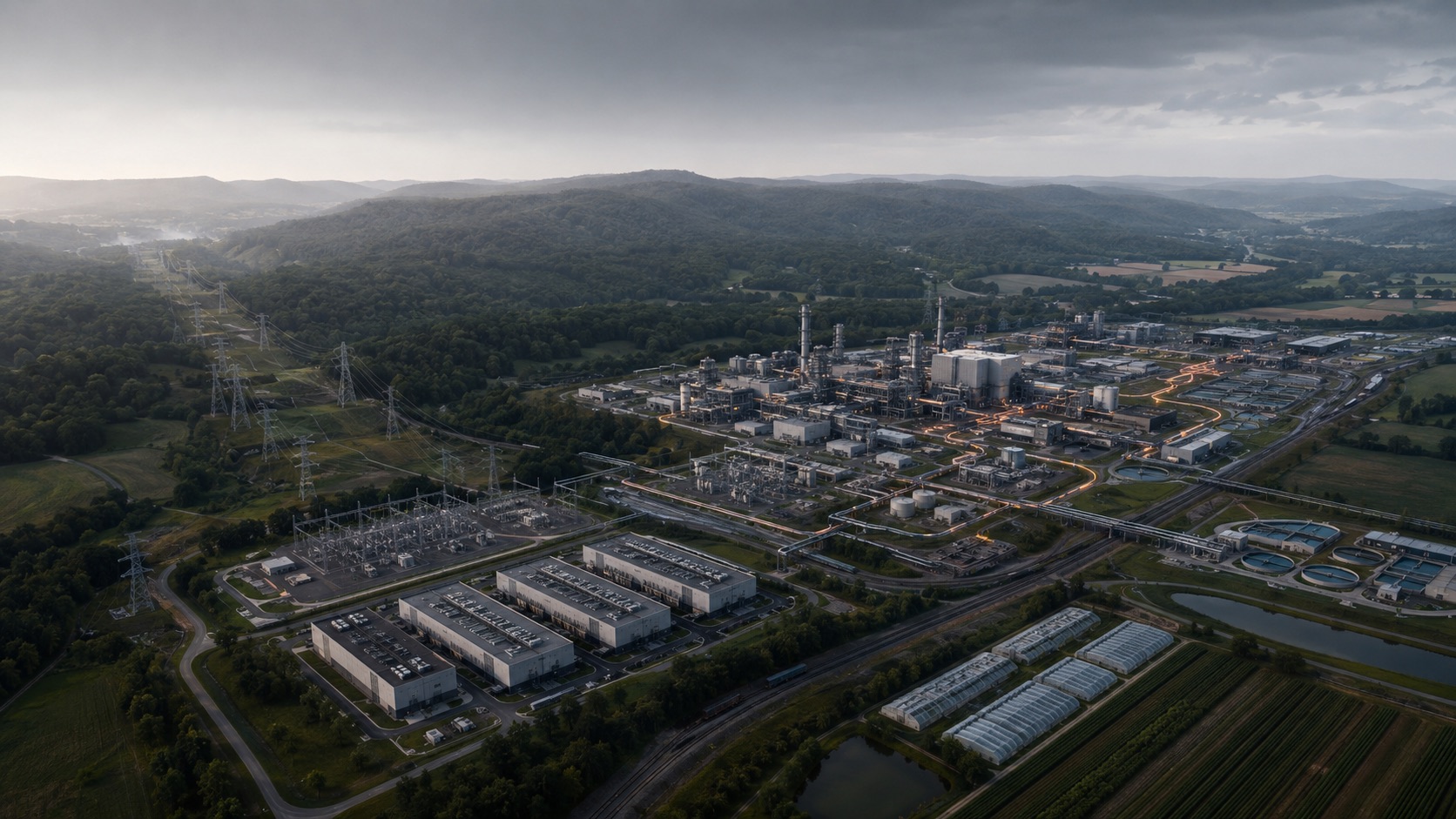
Concept presentation · public-source basis
A proposal for a PORTS–Pike Campus Integration Council: a bounded coordination layer for the valuable interfaces no one program naturally owns.
Pre-decisional. No authority over land, leases, capital, cleanup, utilities or operations is requested or implied.
The situation
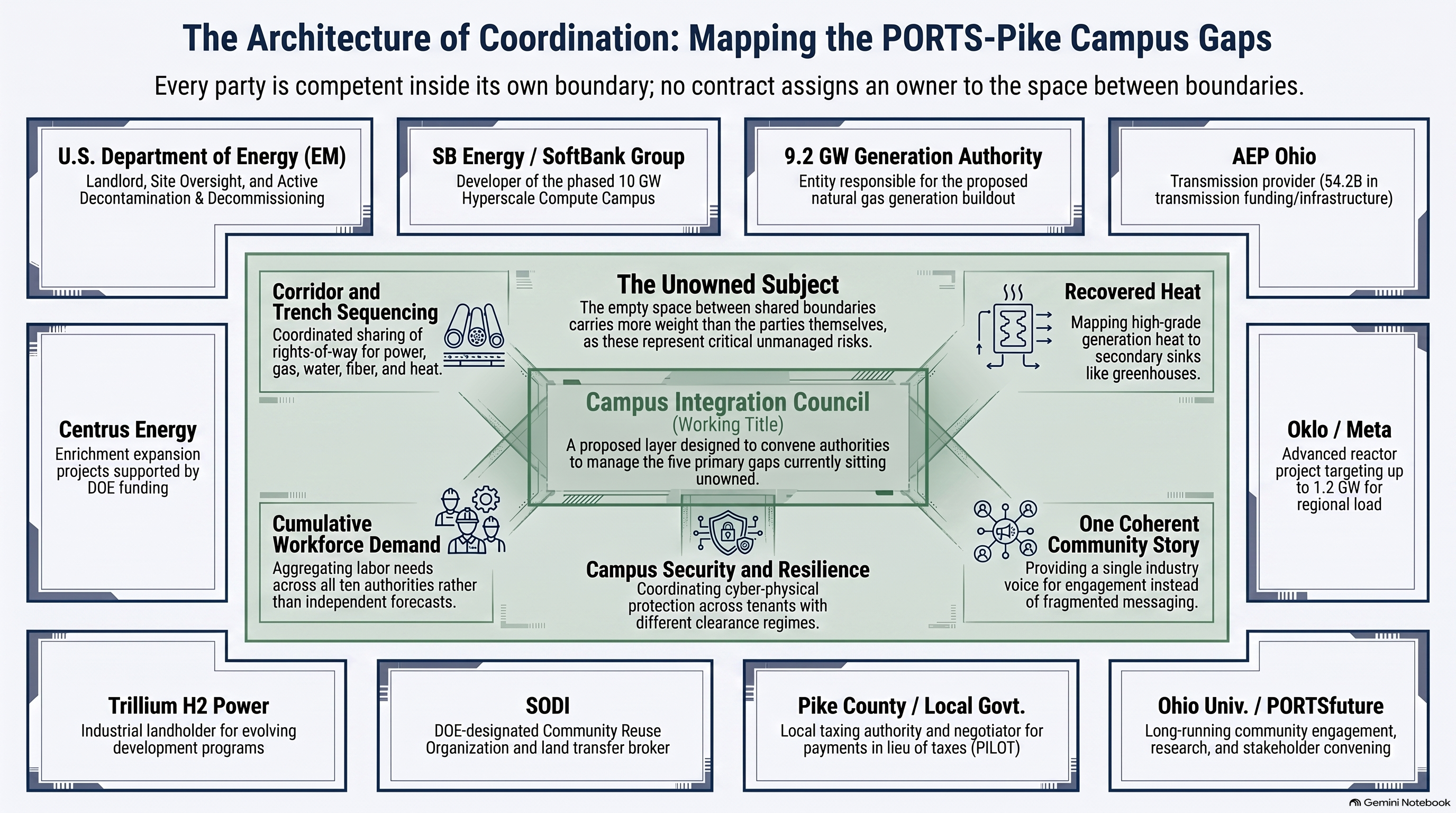
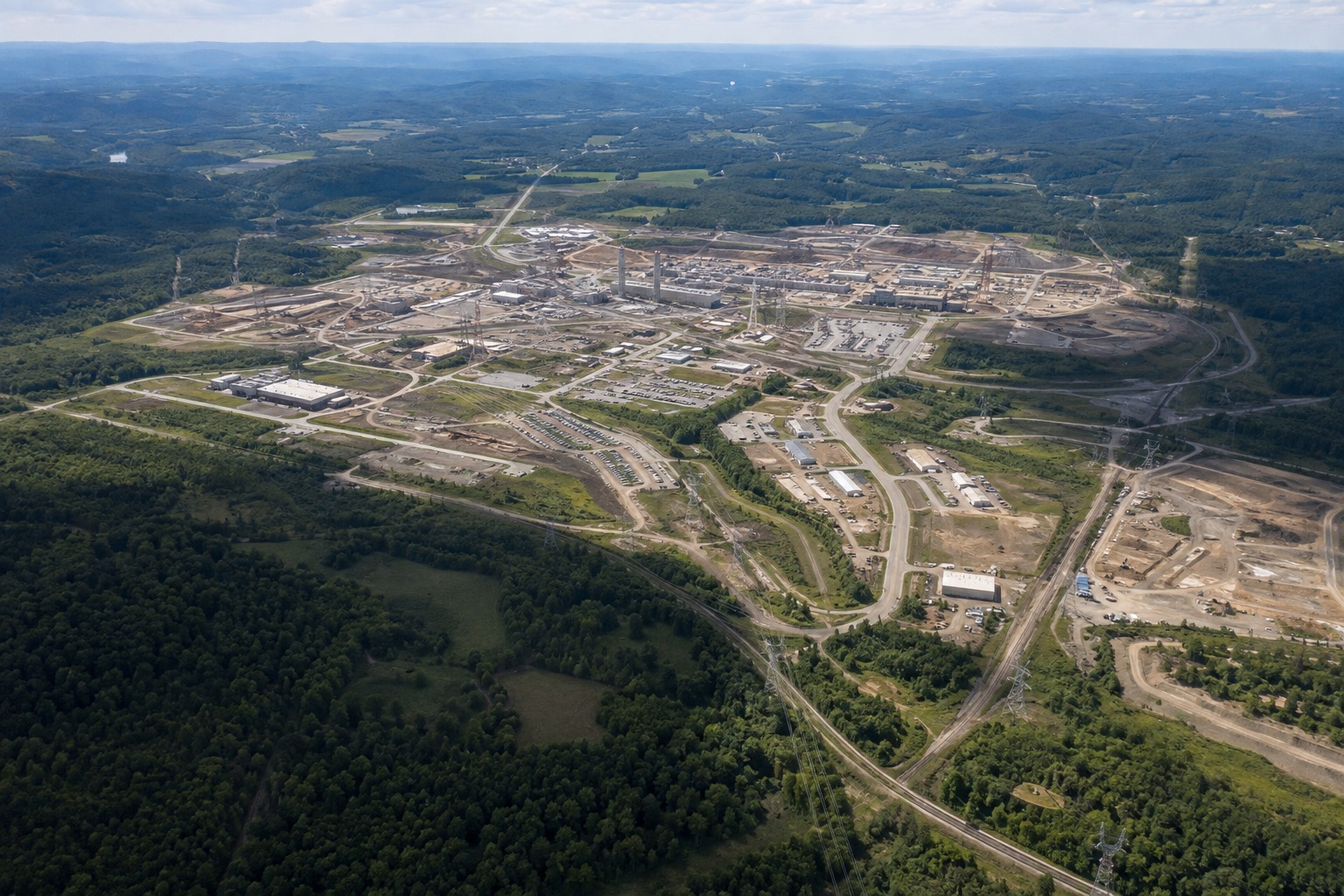
Eight distinct decision authorities hold assets or obligations on or adjacent to the same site. The integration gap is not a failure of any participant; it is the space between their mandates.
Phased campus; the public project site describes first 800 MW capacity coming online beginning in 2028.
Part of the planned 10 GW new-power buildout; public materials identify the U.S. Government as owner.
DOE lists a $900 million American Centrifuge Operating task order under its HALEU enrichment program.
Announced Southern Ohio power campus; public plans target first-phase operation as early as 2030.
Are there cross-boundary opportunities of material value that are currently unowned—and is one of them worth a bounded 30-day screen?
Mini briefing
A concise stakeholder walk-through: where the coordination gap lives, how the two-layer model works, and why heat quality—not sheer volume—drives a credible second-use screen.
Each participant is competent within its boundary. The unowned interfaces sit between them.
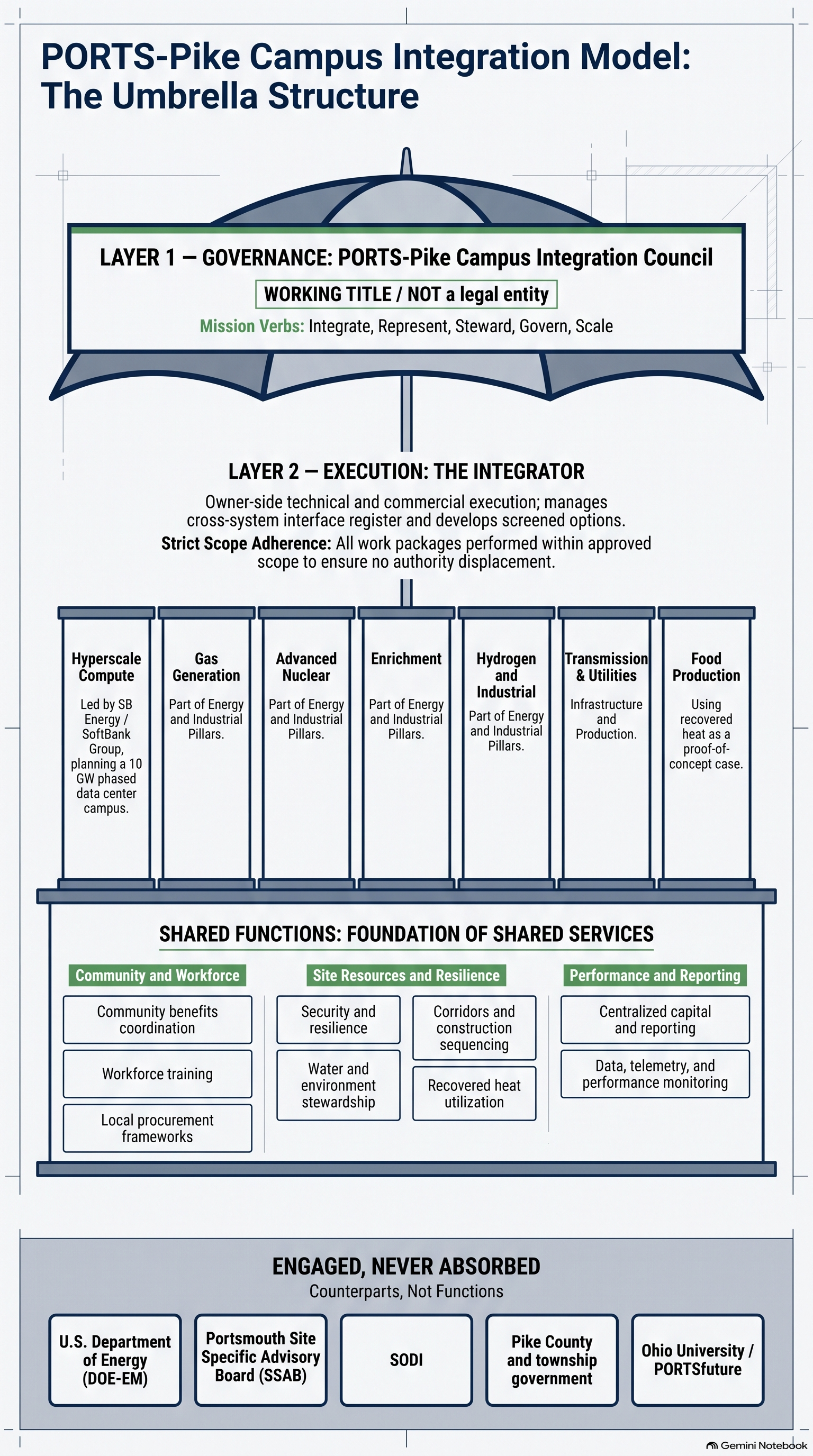
Governance convenes; the Integrator executes only approved scope.
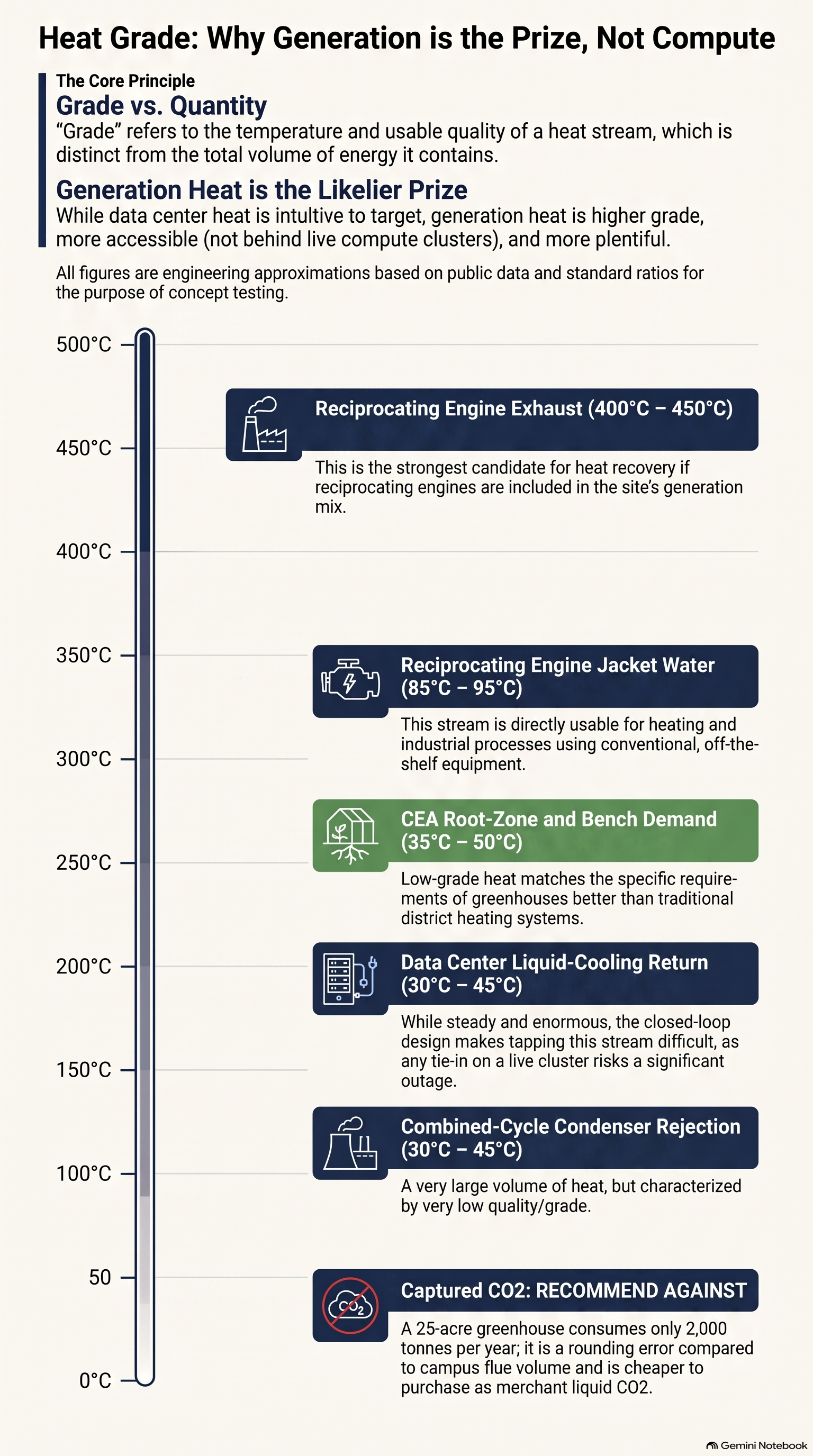
The source-and-sink screen starts with temperature, usability and real interface risk.
The proposal
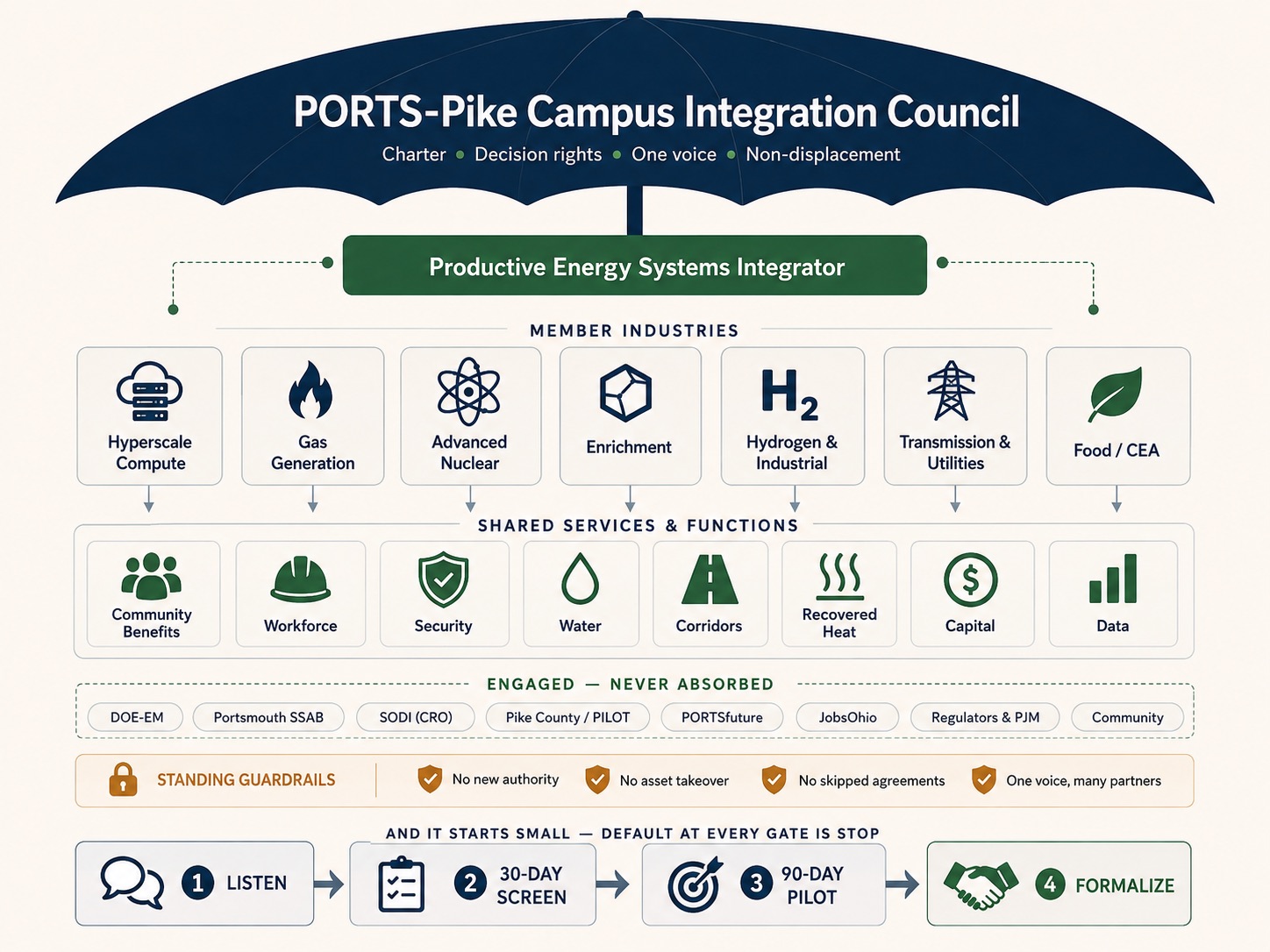
The Council is a governance layer: it builds consensus, protects boundaries and gives the community a credible counterpart. The Integrator is an owner-side technical and commercial function, operating only within approved scope.
Shared direction, community benefits and policy. Begins as a working group—not a legal entity.
Interface register, decision log, source-and-sink screen, economics and approved pilot coordination.
The boundary
Authority stays where it already sits. The Council makes shared decisions easier to see and test; it does not become a new owner, regulator, operator or spokesperson.
Convene a bounded screen, map interfaces, align a shared resource plan and coordinate public-facing material after written approval.
Supersede a landowner, regulator, utility, facility operator or existing community process—or commit any participant without authority.
Maintain the interface register and decision log, then execute only the sponsor-approved technical and commercial scope.
The shared work
No shared function changes a participant’s authority. It simply makes the interdependencies visible, safe and actionable.
Shared posture, notification paths, mutual aid and campus-level exercises—without access to tenant security plans.
One credible, coordinated conversation that supports rather than reopens the existing community-benefit commitments.
A shared demand view and local pathway—not a single employer, procurement process or applicant.
Shared monitoring and understandable public reporting, not control of any operator’s systems.
Protect the physical interfaces that can only be coordinated before concrete, trench and commissioning.
Screen source and sink by grade, season, duty cycle, distance and outage tolerance before making claims.
A common dashboard while every program retains its own eligibility, applicant and procurement rules.
Least-privilege access by default; only approved, necessary information is shared.
The physics
The most valuable stream may sit behind a different owner than the load it serves. The first work is not an offtake claim—it is an honest screen of source quality, interface risk and practical demand.
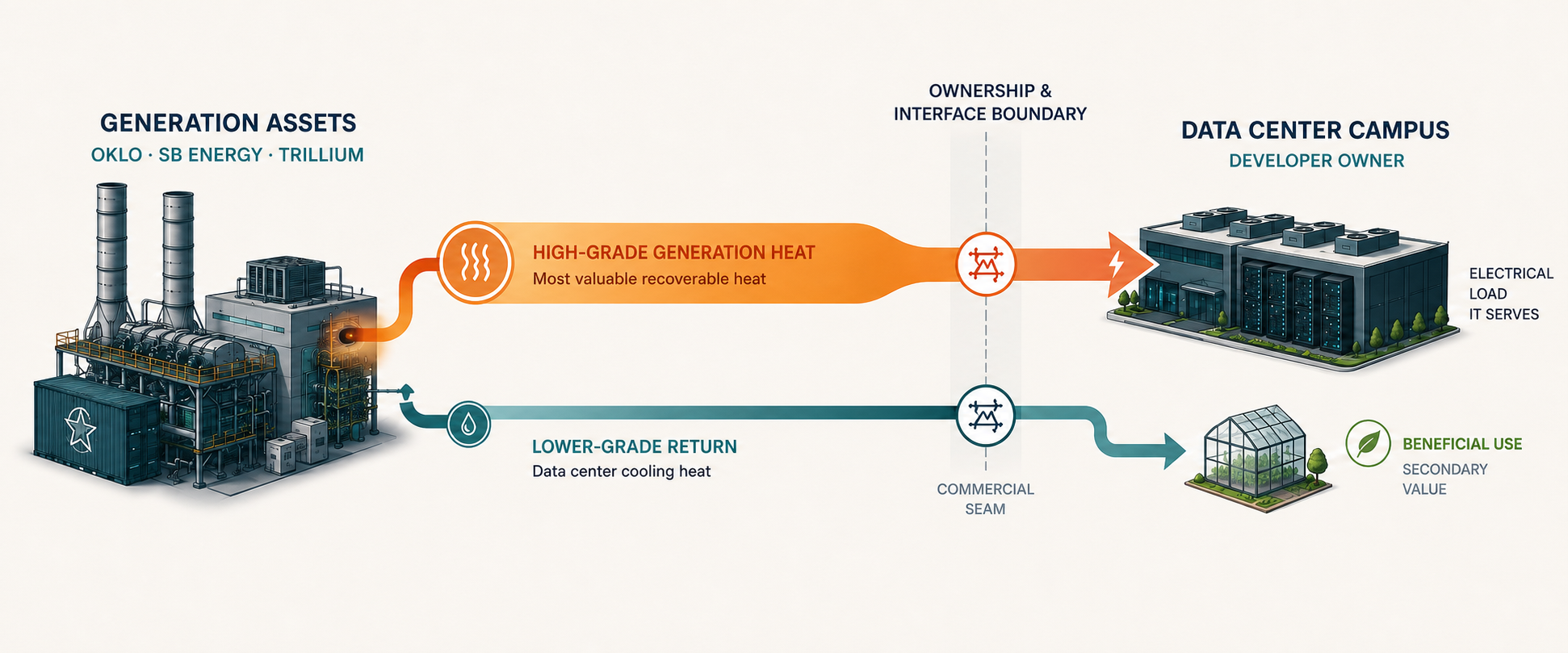
The strongest candidate if engines are part of the actual generation mix. Configuration must be proven.
Large but low-grade. The relevant question is whether a heat-pump uplift works against alternatives.
Potentially steady, but any live-cluster tie-in must not create an outage or compromise a closed-loop design.
A potentially useful lever at a 10 GW interconnection—only where value, control and reliability are clear.
A proof case, not a promise
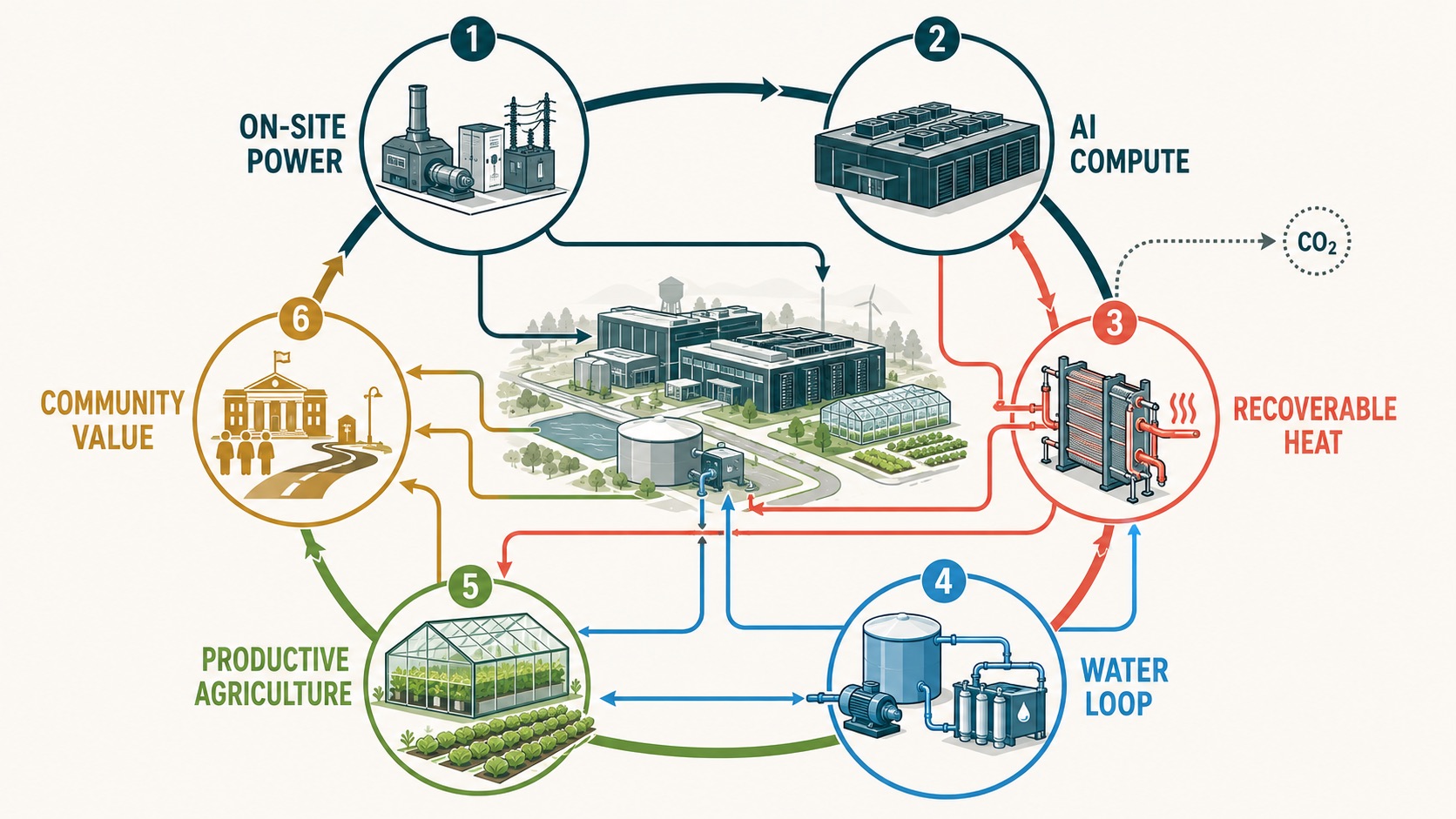
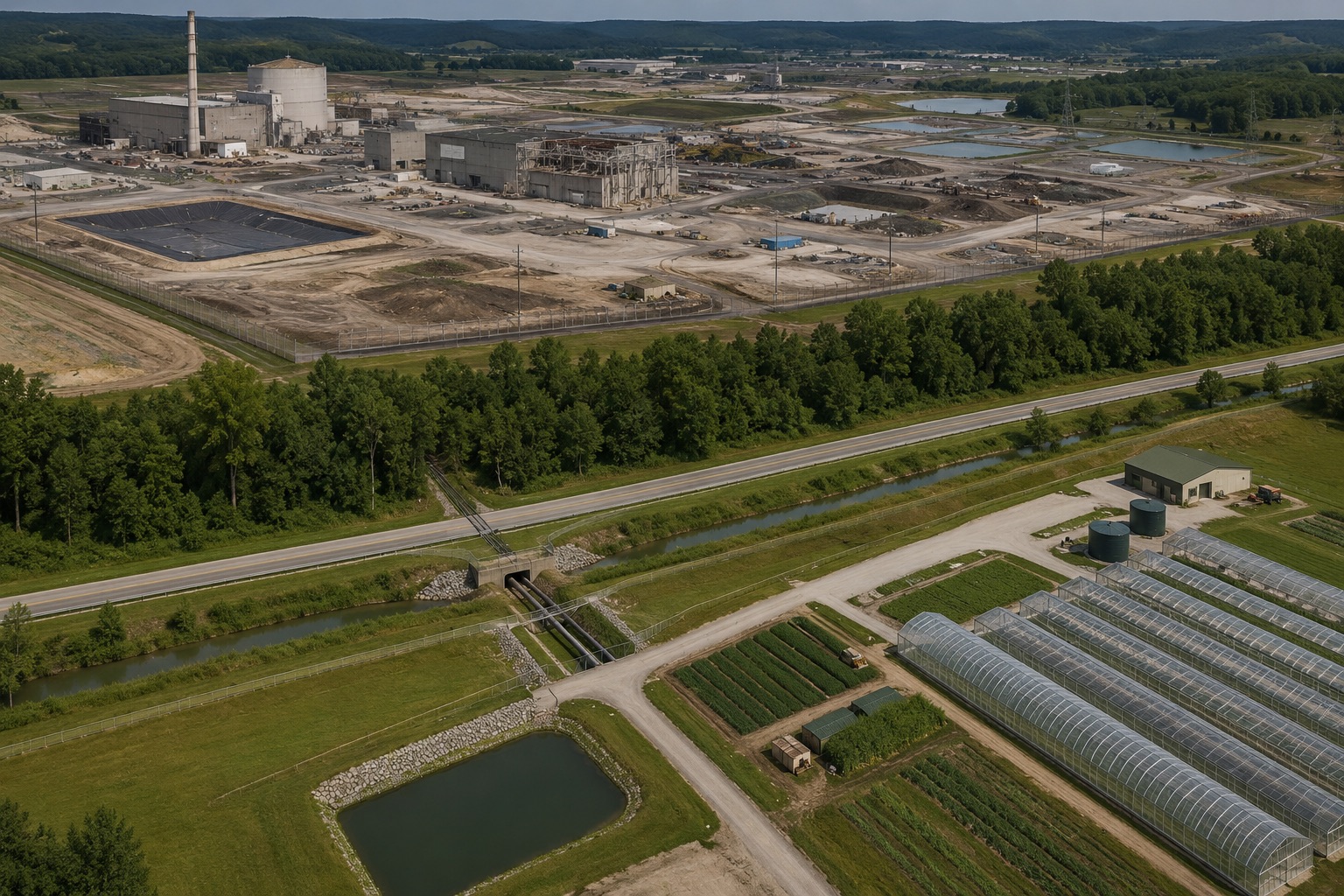
Controlled Environment Agriculture is a leading proof case because it creates a disciplined test of heat grade, distance, uptime, operating ownership, customer demand and public confidence. It is not foregone.
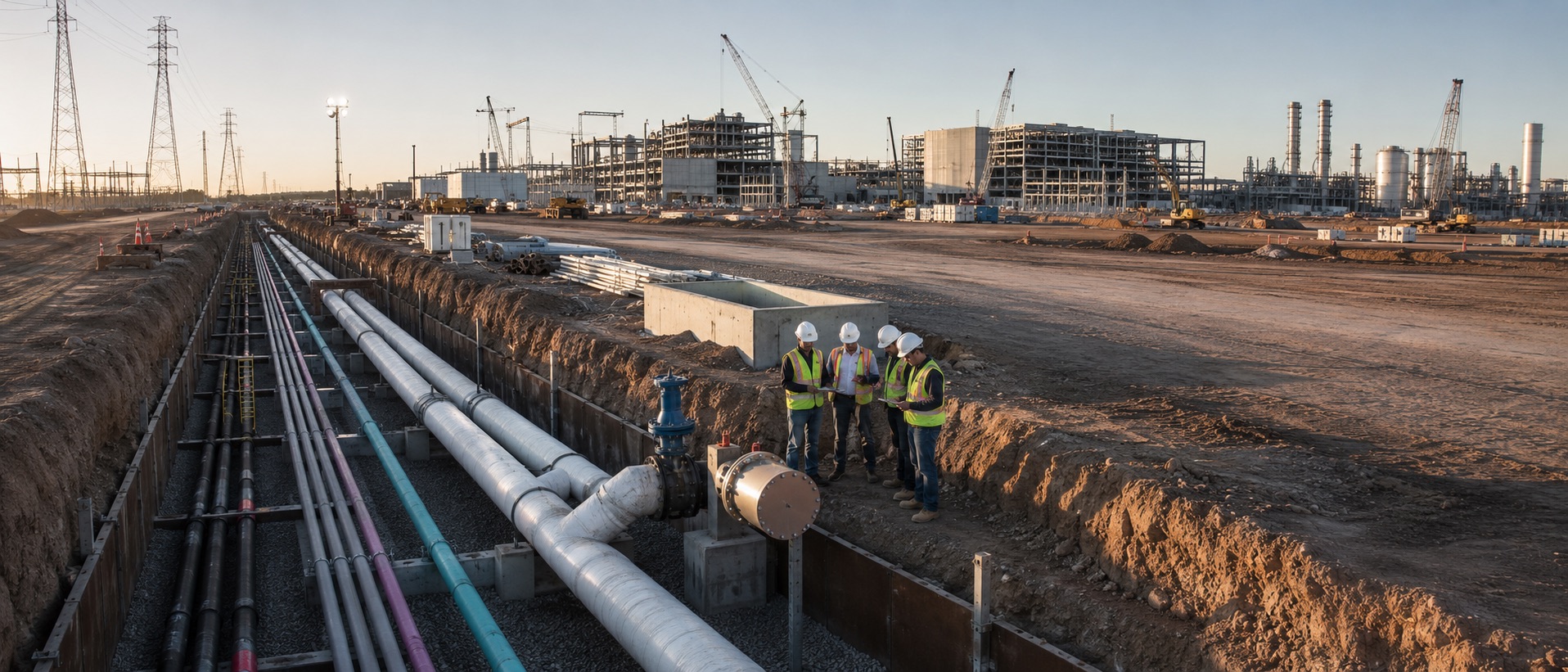
The only urgent item
worth of construction provisions can protect a future option: a reserved corridor, flanged stub, spare trench capacity or land set-aside. This does not ask anyone to build a greenhouse, sign an offtake or allocate capital.
The proposal is to avoid welding a potentially valuable interface shut before it can be studied.Public confidence
Any food-production concept near a former enrichment site inherits a perception problem regardless of engineering. The operating model must be prepared to stop if that confidence cannot be earned.
How the work stays safe
A Council earns trust by reducing ambiguity: who owns the decision, what information is necessary, what must remain private, and when the right answer is to stop.
Any workstream that threatens the first-phase sequence is stopped, not managed.
Before work begins, the responsible, accountable, consulted and informed parties are recorded.
Need-to-know access, source attribution, critical-infrastructure controls and no reuse without authorization.
The forum never bypasses owners’ commercial, competitive or public-procurement requirements.
Shared work aligns to existing commitments and engagement channels; it does not create a competing public track.
Every workstream has a KPI, budget, acceptance criteria and a clear stop condition.
Hard questions
These are proposal responses, not promises or commitments by any named organization. The working title and every proposed role remain pre-decisional.
No. The Council is proposed as an industry-side coordination body. Existing public, community-reuse and regulatory functions remain with the institutions that already hold them.
No. Schedule primacy is a hard gate: work that creates exposure for an active project sequence or permitting timetable is stopped.
No. EnergiAcres proposes to be evaluated for an owner-side role. Any appointment or commercial work remains subject to sponsor direction and the appropriate process.
Then the use case stops. The model treats a clean stop as a valid outcome, particularly where community confidence or a technical screen cannot be satisfied.
A complete, functioning cross-boundary coordination mechanism already in place would make a new Council redundant—and that should be established before anything is formalized.
The path
The default at every gate is stop. The first decision is whether a real gap exists, not whether anyone should join an organization.
Confirm existing roles and the actual gap.
Gate: is there an unowned interface worth addressing?Map interfaces, rank opportunities and cost the option list.
Gate: proceed, defer or stop.Bring one approved use case to a disciplined pre-FEED scope.
Gate: fund, redesign or stop.Create a durable council, charter or entity only if founding members choose it.
Gate: members decide what should endure.Community meetings are imminent. Member commitments are crystallizing. Physical options close at concrete.
The ask
No endorsement of an association, board or membership structure is requested, expected or appropriate at this stage.
Start the conversation →Public-source basis
This concept uses public information only. It does not represent SB Energy, SoftBank, DOE, the U.S. Government, AEP Ohio, Centrus, Oklo, Meta, SODI, Pike County or any other project participant.